


Helping Your Toddler “Speak” Spooky Season: SLP-Backed Tips for a Fun & Stress-Free Halloween
- Danielle Giarratano

- Oct 29, 2025
- 3 min read

Halloween is supposed to be fun, right? Costumes, candy, giggles… maybe even a little sugar rush. But if you’re a toddler mom (especially one with a sensitive or hesitant little one), you already know that spooky season can bring big feelings.
Between itchy costumes, unfamiliar faces, and the excitement of running door to door — it’s a lot for our little communicators to process. The good news? With a little prep, Halloween can be full of language growth, confidence, and connection.
Step 1: Ease into Costumes
If your toddler resists wearing their costume, you’re not alone! Many little ones have sensory sensitivities or just don’t like the unfamiliar feeling.
Try this:
Start with dress-up play a few days before Halloween. Let them wear just one part of the costume (like a hat, cape, or tail).
Practice wearing it for short bursts — during playtime, storytime, or snack.
Offer choices! “Do you want to wear the pumpkin shirt or the ghost shirt?” Giving control builds confidence.
If they really don’t want to wear it, that’s okay too. A festive shirt or themed pajamas still make for sweet memories.
This slow introduction helps desensitize the experience — and builds language opportunities around clothing, textures, and emotions (“It’s soft!” “It’s itchy!” “I feel silly!”).
Step 2: Teach Trick-or-Treat Words and Gestures
Halloween is full of functional language opportunities!
Before the big night, practice what to say and do:
Knock knock! – Practice taking turns knocking on the door or pressing a pretend doorbell.
Trick or treat! – Say it together in a silly or sing-song voice to keep it fun.
Thank you! – Model gratitude, even if your toddler just waves or signs “thank you.”
Bye-bye! – Simple social closings help them navigate the moment with confidence.
You can even create a mini “pretend Halloween” at home — line up stuffed animals or siblings and have your child “go trick-or-treating” around the house.
For children with emerging language, you can simplify to just one word (“treat!”) or a gesture (holding up their bucket and smiling). Every effort counts!
Step 3: Prepare for Candy Choices
For many kids, candy is a motivator — but also a sensory adventure. Some sweets are sticky, chewy, or too intense.
Try this:
Sort through the candy together. Describe each piece — “This one is smooth. This one is crunchy!”
Offer simple choices (“Do you want chocolate or lollipop?”).
Practice asking for help: “Open, please!”
Use candy play for language-building: color sorting, counting, describing taste (“Sweet!” “Sour!” “Yummy!”).
If your child has dietary restrictions or sensory preferences, consider bringing along “safe candy” or small non-food treats so they can fully participate.
Step 4: Frontload the Experience
Just like with any new routine, frontloading is everything.
Talk through the steps of Halloween in simple, visual ways:
“First we’ll put on our costumes, then we’ll walk to the houses, then we’ll say trick-or-treat and get candy.”
You can even draw a mini picture schedule or read books like “Room on the Broom” or “Five Little Pumpkins” to set the mood.
Frontloading helps toddlers anticipate what’s coming and reduces anxiety. It’s not just about language — it’s about emotional regulation, too.
From My Home
As a mom, I know how easy it is to hope Halloween goes perfectly — the cute costume pictures, the happy memories. But sometimes, our kids need us to let go of the “picture perfect” and meet them right where they are.
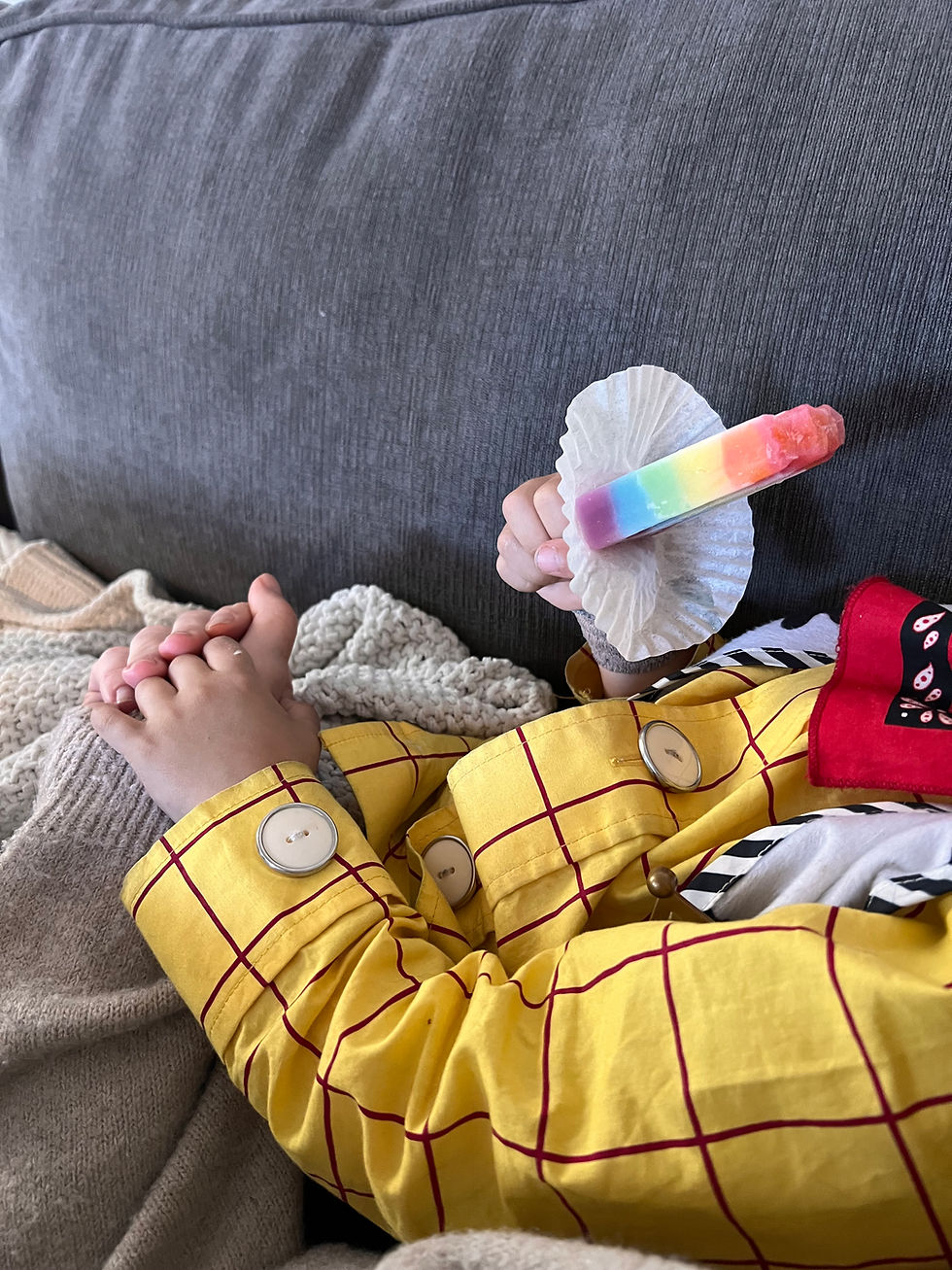
Last year, my oldest went trick-or-treating with his bestie and had the best time — giggling down the street, eating all the gummies along the way, and getting totally caught up in the excitement. Meanwhile, my youngest had RSV and snoozed the entire time in the stroller, wrapped up like a little pumpkin burrito. It definitely wasn’t the picture-perfect night I’d imagined, but it was ours — real, messy, and full of love.
These early years are about helping them feel safe, connected, and proud of every little word and wave along the way.
🧡 You’ve Got This, Mama
Whether your child says “trick or treat!” loud and proud or just beams as they hold out their bucket, you’re helping them grow confidence, communication, and joy — one spooky step at a time.
Want more everyday language strategies like these?
🎃 Join my Facebook group, First Words to Forever: Parent Connection Hub, for more seasonal tips, real-life stories, and a community that gets it.
XOXO,
Danielle
Speech-Language Pathologist & Toddler Mom


Comments